Active projects
NBR reports: “The technology integrates anaerobic digestion with microalgae purification in modular 40-foot container units to produce commercial products such as 99.7% pure biomethane, biofertiliser, algal bio-stimulant, and protein.”
Rolleston H2&e Bio-energy claims to produce “clean, sustainable electricity, hydrogen and bio-carbon from waste” but plans to use plastic waste and forestry waste to make synthetic gas.
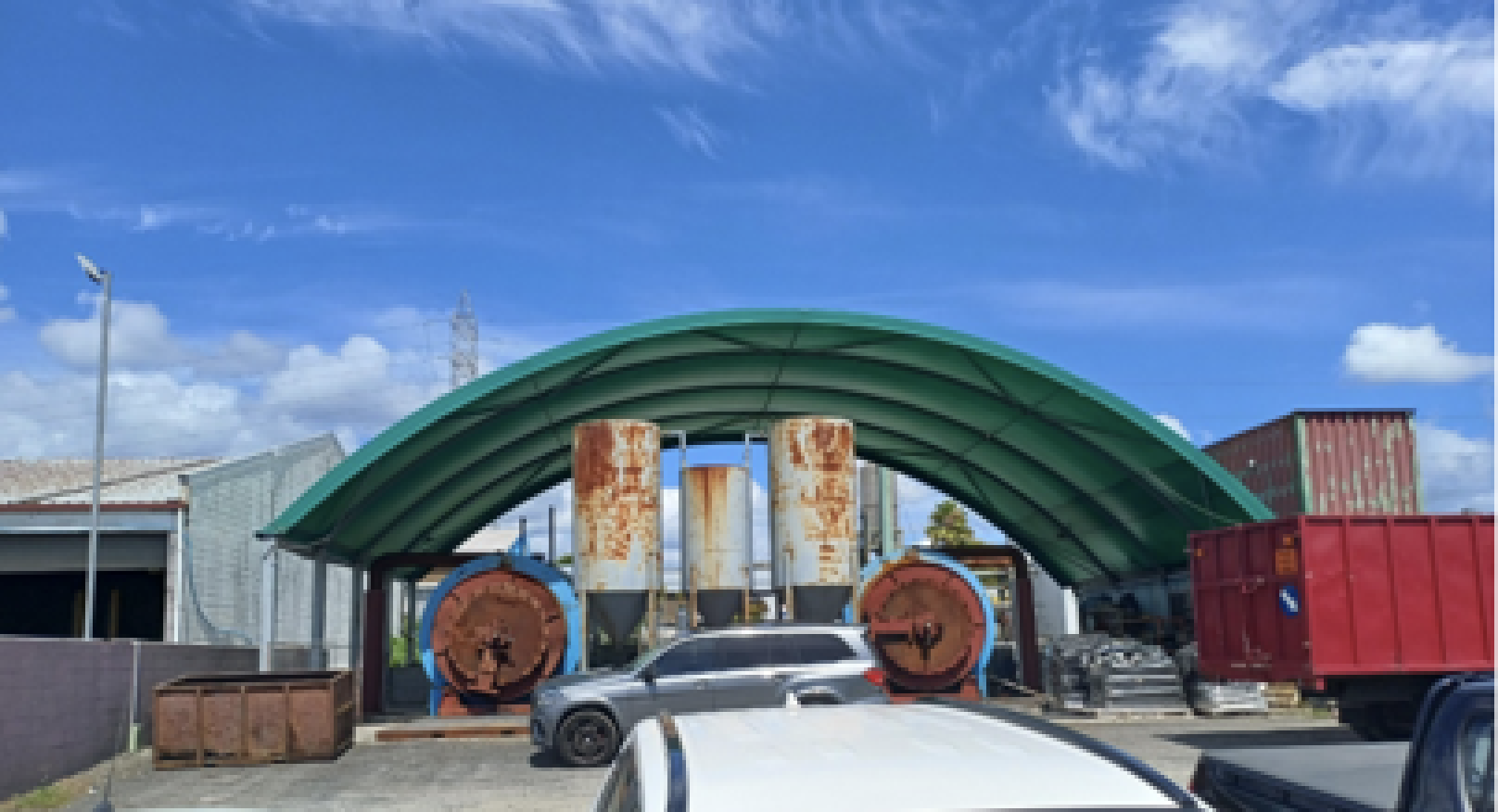
A property in Whangārei was observed with emissions by off-duty NRC Consents Officer: discharge was from an unconsented pyrolysis plant used for turning plastic waste into various products.
A Hamilton scrap metal company is trying to build an incinerator at 401 Racecourse Road in Te Awamutu that would burn tyres, plastics and mixed waste next to houses, schools and food production businesses.
Bioplant wants to build a pyrolysis plant on Tauwhareparae Road, Tolaga Bay that would accept mixed solid waste, plastics and forestry slash.
The Government co-funded the two feasibility studies with Air New Zealand to study failed waste-to-energy technology for so-called sustainable aviation fuel.
Technology company Licella, along with cardboard packaging and paper recycler Oji Fibre Solutions, on-farm plastic recycler Plasback, Silver Fern Farms, and Woolworths New Zealand, with money from the Ministry for the Environment’s Plastics Innovation Fund announced a joint feasibility study of an advanced chemical recycling facility.
Mayor Craig Jepson has been an enthusiastic supporter of incineration, and pushing for a fast track project for the region.
There is a proposed waste to energy project called ‘Kaitiaki’ that Intends to import waste from around the Pacific.
Defeated projects
Spanish recycling services company Urbaser, Chinese environmental management firm Tianying Incorporated and New Zealand’s Renew Energy established the joint venture called South Island Resource Recovery (SIRRL) to look for possible sites near Waimate in South Canterbury.
Photo credit: Waimate District Council
Bioplant sought to build a mixed waste pyrolysis plant at the new Resource Recovery plant that sits on stolen Ngāti Kauwhata land.
The project was the original pre-cursor to Project Kea in Waimate, involving Renew Energy
This was a pyrolysis project intended to use treated timber posts from vineyards as fuel. It was rounded defeated by the community in 2018.